Custom business applications: how we put AI to work
Sigma 7 Services is a custom software development company based near Houston. We build web applications around how your business already runs: a fast website connected to live dashboards, your CRM and back-office systems, lead and ad-cost tracking, and staff sign-in. That connected system is what lets AI do real work.
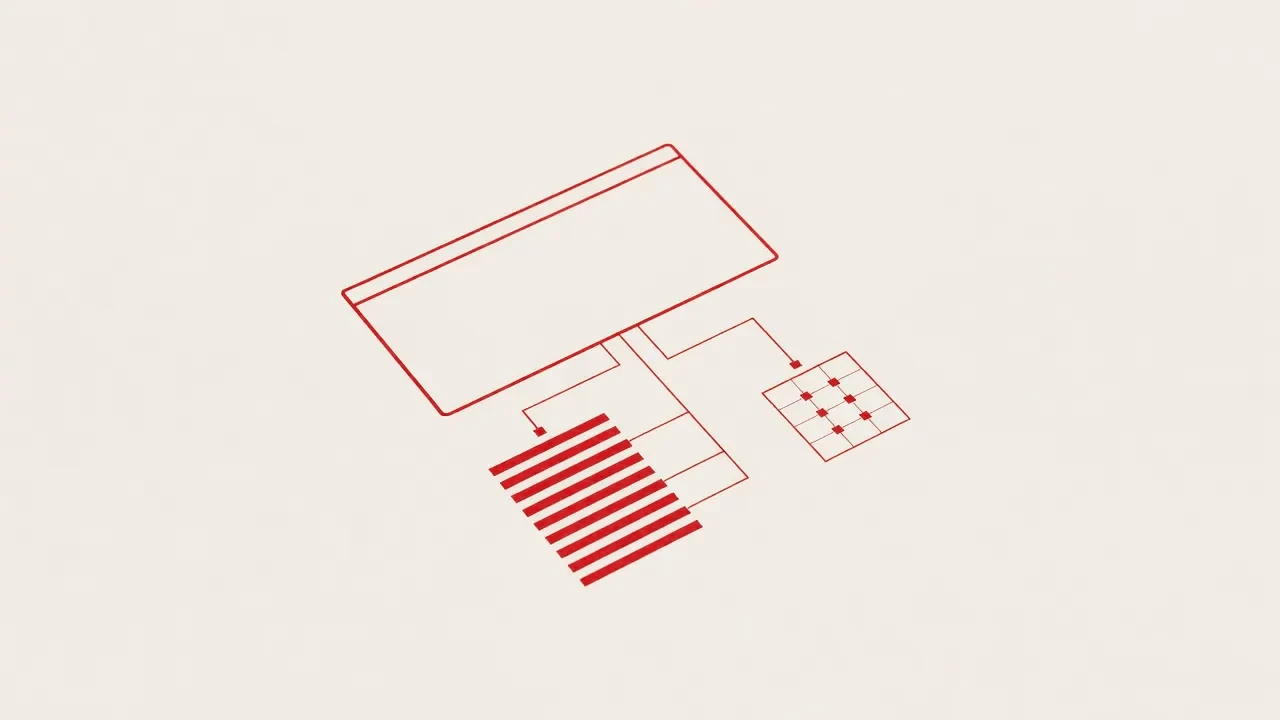
You know you've outgrown it when the answer lives in someone's head
The business grew and the tools didn't. Leads come in through the website, the phone and three ad accounts. The CRM has half of them. A spreadsheet holds the rest, and one person knows how it works. Every report is a project, and every new hire learns five logins.
AI can't sort data that's stuck in five places
AI needs to reach your records and write back to them. When the website, CRM and spreadsheets don't connect, the AI has nothing reliable to work with. A custom application fixes that first, so AI goes in on top of clean, connected data.
A website plus the intelligence behind it
Every build starts with the website, because that's where customers and leads arrive. Then we wire it to the rest.
- 01A fast, hand-built websiteCustom design and code, light pages that load quickly on a phone, structured so search engines and AI assistants can read it.
- 02Live dashboardsThe numbers you ask for every Monday, on one screen, updated as the data comes in.
Dashboards - 03CRM and system integrationForms, CRM, email and back-office systems pass data to each other without retyping.
CRM integration - 04Visitor-to-lead and ad-cost trackingEach lead arrives with its source: the ad, the keyword, the page. Ad spend sits next to it, so cost per lead is a number, not a guess.
Lead tracking - 05Staff sign-inYour team signs in to see what their role needs, and nothing it doesn't.
- 06AI inside the systemAI that sorts inquiries, drafts replies and summarizes activity, with staff approving what goes out.
AI integration
Where does AI fit into a custom application?
AI fits where people do the same reading, sorting and writing every day: new inquiries, follow-up emails, weekly summaries. In a custom application it works from the same records as your staff, behind the same sign-in, and its drafts wait for a person's approval.
Why one team for the site, the systems and the AI?
When one company builds the website, another connects the CRM and a third sells you an AI tool, every gap between them is somebody else's problem. We build all three, so when something stops reaching the CRM there's one team to tell.
How a custom build goes
- Step 1Conversation
You show us the spreadsheets, the tools and the question you can't answer today.
- Step 2Scope
We write down what we'd build, what we'd connect and what we'd leave alone.
- Step 3Build and hand over
We build it, connect it, show your team how to use it and stay on to support it.
See a full build
For a graduate seminary we rebuilt the website, sent every Request-Info form into the student system and gave the admissions office live dashboards, a lead-source view and a counselor board.
Questions about custom software
How much does custom software cost?
The cost comes from four things: how many systems we connect, how many people sign in, how much of the build is new rather than connected, and how much support you want after launch. We scope each build before any work starts.
Custom software or an off-the-shelf tool?
If a subscription tool does the job, use it. Custom work pays off when you're stitching several tools together by hand or bending your process to fit the software. Often the right answer is to connect the tools you own. Our guide walks through it. Custom software vs off-the-shelf
Do you work with businesses outside Houston?
Yes. Custom applications are built and supported remotely, so clients don't need to be local.
What happens after launch?
We support what we build. Support terms are agreed for each build.
Tell us the question you can't answer today
Bring the spreadsheet. We'll tell you what we'd build, connect or leave alone.